Quiet Magic Circle Pilates: Space-Saving Strength
By Priya Kapoor • 1st Nov
When you're squeezed into an urban apartment or running a compact studio in a mixed-use building, magic circle pilates and pilates strap exercises become your strategic advantage. These unassuming tools deliver maximum strength development within minimal square footage, critical when every inch and decibel counts in shared living environments. For space-conscious practitioners and micro-studio operators, the magic circle isn't just a prop; it's the operational linchpin that maintains throughput while respecting the invisible boundaries between your practice and your neighbors' peace. In my decade of studio management, I've seen that operational excellence is quiet, predictable, and invisible to your neighbors, meaning the most effective equipment works hard while making almost no sound.
The Compact Powerhouse for Urban Pilates Spaces
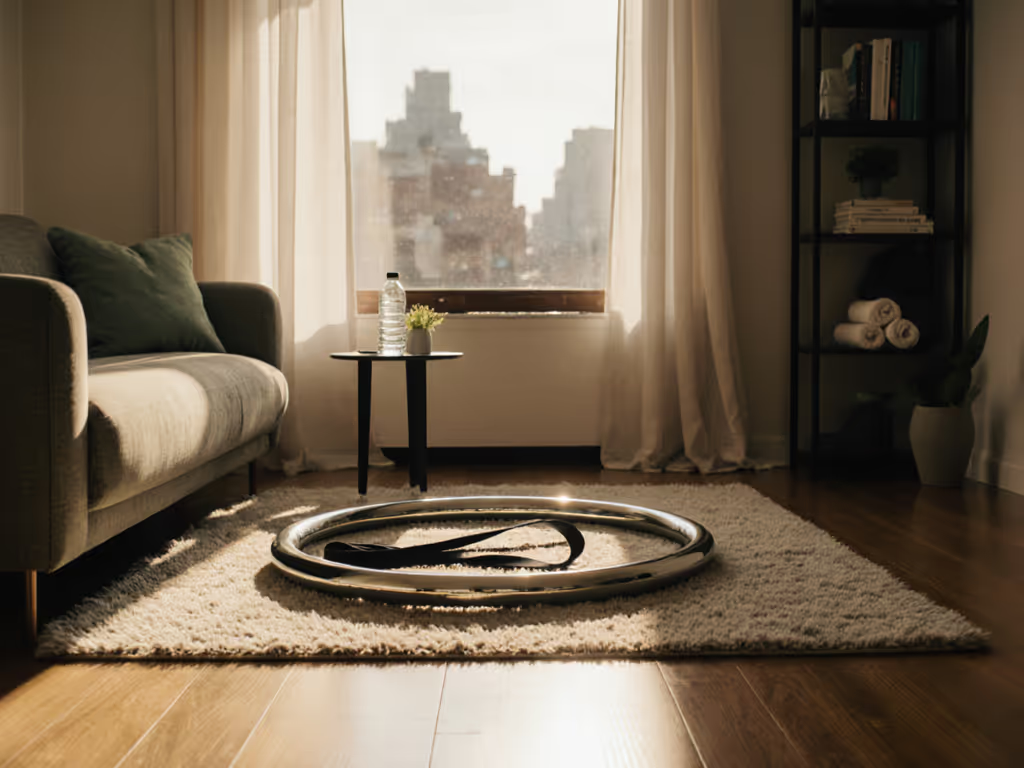
For apartment dwellers navigating tight floor plans and studios fitting multiple clients into 400 square feet, the magic circle pilates apparatus delivers disproportionate value. At just 13-14 inches in diameter, this lightweight ring tucks into a cupboard alongside your mat rather than dominating your living space like a reformer or Cadillac would. Unlike bulkier equipment that requires dedicated room layout planning, the magic circle adapts to existing spaces without demanding architectural concessions. For layout, flooring, and placement tips, see our silent small-space studio setup guide. Its compact profile solves the primary pain point of limited square footage (standard reformers overwhelm small rooms and block critical walkways), while still delivering the nuanced resistance needed for progressive strength development.
Operational excellence is quiet, predictable, and invisible to your neighbors.
The magic circle's durability under consecutive use makes it ideal for micro-studios managing back-to-back sessions. When properly maintained, it withstands daily client rotations without developing the squeaks, clacks, or spring chatter that plague mechanical equipment. Its low-maintenance profile eliminates the maintenance burden of spring lifespan, lubrication, and alignment checks that cause anxiety for renters and time-poor owners. For practitioners, this means consistent resistance training without the noise escalation that triggers neighbor anxiety, a common issue with unstable foldable equipment that develops performance issues within months.
Designing Quiet Flow Lanes for Maximum Impact
When space constraints demand strategic equipment choices, the magic circle pilates ring becomes your primary tool for creating effective flow lanes that respect shared walls. My first micro-studio nearly ended over a single thump during lunch hours, a harsh reminder that strength training must be designed alongside neighbor relations, not sequentially. The magic circle's genius lies in its ability to deliver targeted resistance with minimal movement amplitude, allowing you to build strength without floor vibrations that travel through century-old wood joists or thin concrete slabs.
The magic circle benefits extend beyond space efficiency to include noise mitigation through precise muscle activation. When properly positioned between knees during bridge variations or between hands during chest lifts, the ring provides measurable resistance without requiring expansive movements that generate disruptive sounds. For mat-based practitioners, this translates to higher throughput of exercises per session, more quality movement within the noise tolerance threshold of your building. Unlike reformer sessions that require careful timing to avoid floor vibration complaints, the magic circle enables strength development at any hour without triggering neighbor anxiety. If you still want compact gear beyond the ring, explore our quiet apartment equipment picks.
Consider these strategic applications:
- Pilates resistance ring positioned between knees during seated spine twists targets deep obliques without requiring hip extension that creates floor contact noise
- Pilates strap exercises anchored to door frames rather than floor attachments eliminate vibration transfer entirely
- Magic circle pilates sequences incorporating wall-supported movements maximize stability without requiring floor-hugging equipment that transmits vibrations
Strategic Implementation for Space-Constrained Environments
To maximize your magic circle pilates investment while maintaining peaceful neighbor relations, implement these operational protocols that balance throughput with acoustic discretion:
Footprint Optimization
Position your mat against an interior wall (not shared with neighbors) when using the magic circle for resistance exercises. This creates natural sound absorption while keeping your movement footprint within 36-48 inches, well below the 8x10 foot minimum required for reformer setups. For best pilates equipment choices in tiny spaces, prioritize items that nest within your existing storage rather than demanding dedicated real estate.
Quiet Sequence Design
Structure your pilates ring workouts in three strategic phases:
- Foundation Phase (5 minutes): Begin with magic circle held lightly between palms while seated, focusing on breath control and alignment (zero movement means zero noise risk)
- Resistance Phase (15 minutes): Introduce controlled movements where the magic circle provides feedback without requiring forceful compression (think gentle adduction rather than explosive contractions)
- Integration Phase (10 minutes): Combine the ring with pilates strap exercises against walls to maintain stability (without floor contact)
Client-Threading Protocol for Micro-Studios
If you operate multiple stations in a shared space, implement rotation scripts that prevent equipment clash and noise stacking. For example, have one client using the magic circle for seated work while another performs strap exercises on the wall (alternating movement patterns prevents simultaneous peak noise moments that trigger complaints). This approach maintains your throughput metric while keeping acoustic impact below the threshold of adjacent units. To expand programming without adding noise, check our quiet space-saving accessories under $100.
Your Quiet Practice Blueprint
The magic circle pilates apparatus represents the ideal convergence of space efficiency, acoustic discretion, and functional strength development for urban practitioners. Unlike other equipment that requires trade-offs between performance and peace, the magic circle delivers measurable resistance training within the strict physical and acoustic constraints of shared living spaces. When properly integrated into your flow lanes, it transforms your practice from a potential source of neighbor friction into a model of operational excellence, where strength gains happen quietly, predictably, and without disruption.
Start today by implementing one magic circle exercise into your mat routine during traditionally quiet hours (9-11am or 2-4pm), then gradually expand your repertoire while monitoring your acoustic impact. Place your mat on a dense foam pad (not thin exercise mats) to further isolate vibrations, and schedule your most dynamic movements during building peak noise hours when foot traffic masks your practice. For choosing a pad or mat that actually dampens sound, see our Pilates mat thickness and grip comparison. This strategic approach ensures your Pilates practice strengthens your body without straining your neighbor relations.
Remember: flow that respects tenants next door is real operational excellence. In the quiet magic of your circle, you'll find strength that fits your space, your schedule, and your community.
Related Articles