Safe Youth Pilates Equipment: Growth-Friendly Adaptations Guide
By Nora Bergström • 8th Nov
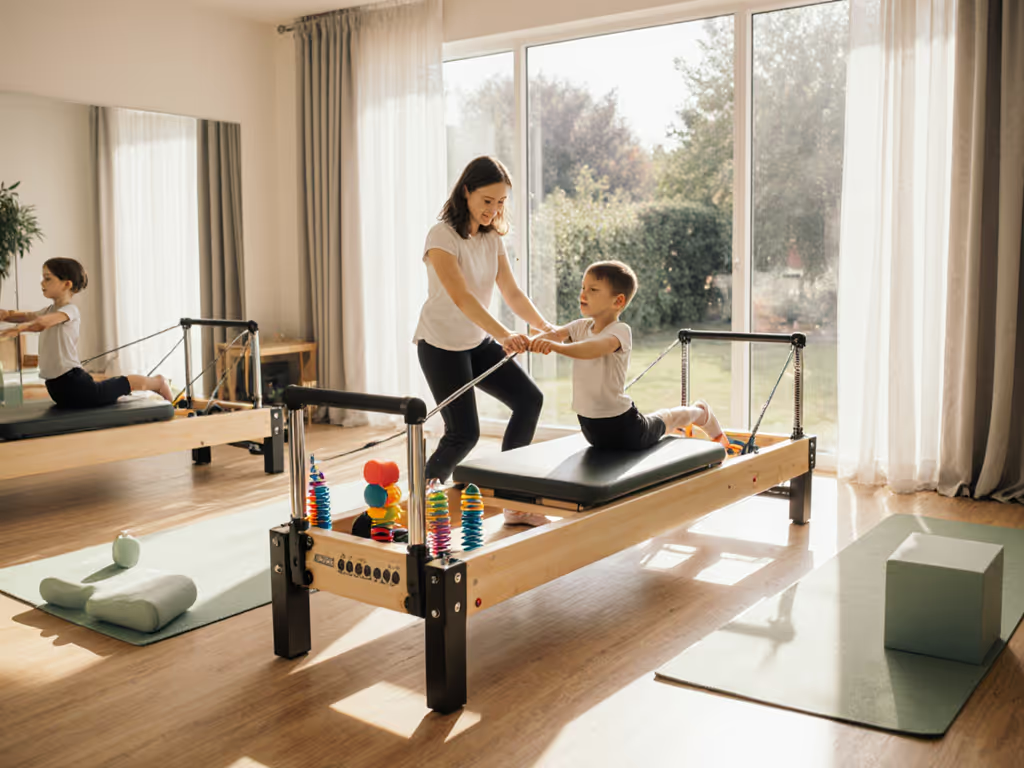
When considering the best Pilates equipment for young practitioners, thoughtful youth Pilates adaptations are essential for safety and developmental appropriateness. Children's bodies aren't simply small adult bodies, they are dynamic systems undergoing constant change. This guide addresses the unique requirements of growing bodies while honoring the quiet, comfort-focused approach that transforms practice from obligation to joyful ritual. Comfort is quiet, and quiet is compliance with your goals.
Permission to focus begins with knowing the equipment won't overwhelm your child's developing frame or your shared living space.
Understanding Youth Pilates Safety: Your Essential FAQ
Why can't children use standard Pilates equipment without modifications?
Standard Pilates apparatus is typically designed for adult proportions and strength. Children's skeletal systems contain growth plates (epiphyseal plates) that remain soft until late adolescence, making them more vulnerable to compression injuries. According to the American College of Sports Medicine, growth plate injuries account for 15-30% of childhood musculoskeletal injuries. When equipment lacks proper adjustability for smaller frames, children compensate with poor alignment, creating friction rather than flow.
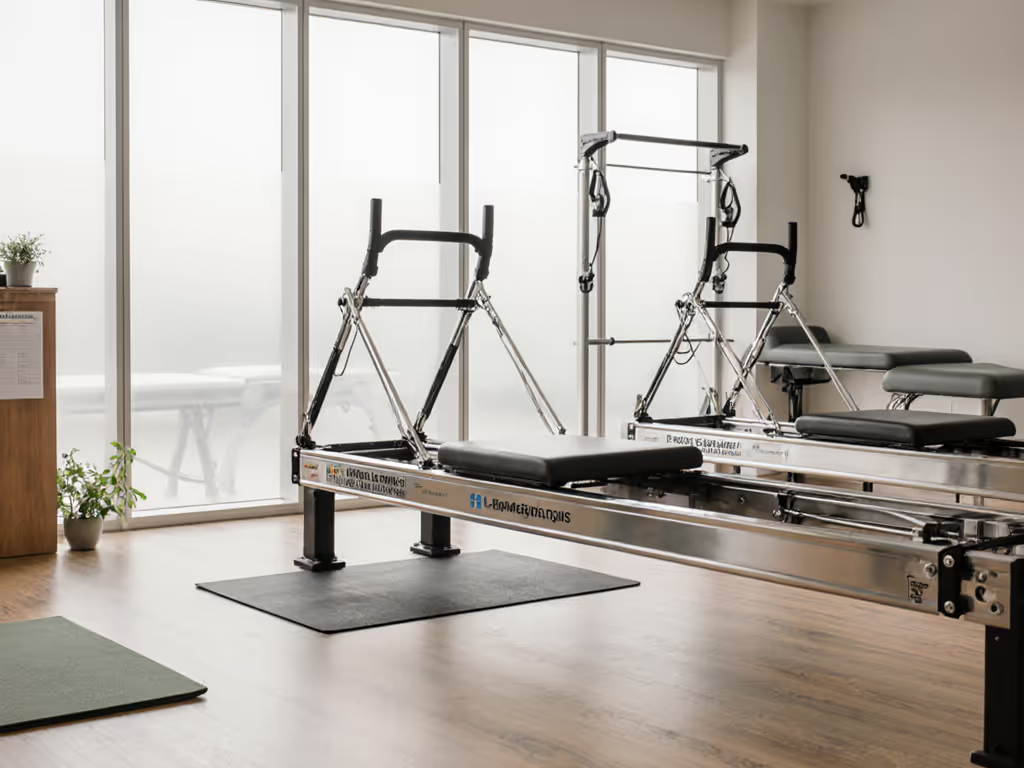
The solution? Prioritize equipment with extensive range adjustments. For example, footbars that lower to 8 inches (rather than the standard 10-12 inch minimum) accommodate shorter leg lengths while maintaining knee safety during footwork. Look for hip pads with incremental height settings. These small adjustments prevent lumbar compression during seated exercises as growth spurts occur.
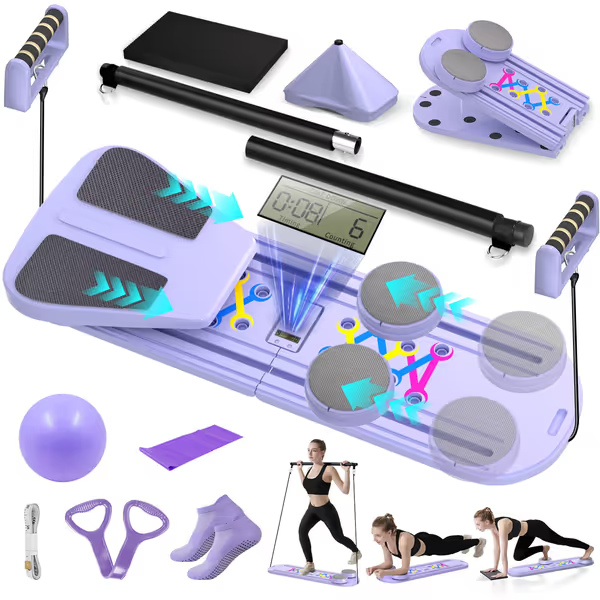
ORWIPO Foldable Pilates Board
Compact, foldable Pilates system for diverse, full-body home workouts.
$89
Weight Capacity330 lbs
Weight Capacity330 lbs
Pros
Multifunctional: combines 6+ exercise tools.
Foldable & portable: ideal for small spaces/travel.
Built-in timer & counter for progress tracking.
Sturdy, non-slip design supports 330 lbs.
Cons
Not suitable for plush mats; requires flat surface.
Customers find the Pilates board delivers a real workout, effectively training muscles all over the body, and is surprisingly convenient for daily exercise. The product is sturdy, simple to use, and easy to store, with one customer noting it comes with a travel bag for transport. They appreciate its multifunctionality, with one review highlighting how it combines various features into one compact system.
Customers find the Pilates board delivers a real workout, effectively training muscles all over the body, and is surprisingly convenient for daily exercise. The product is sturdy, simple to use, and easy to store, with one customer noting it comes with a travel bag for transport. They appreciate its multifunctionality, with one review highlighting how it combines various features into one compact system.
How do growth spurts affect equipment safety?
Growth spurts create sudden changes in limb length and center of gravity that dramatically impact safety. During rapid growth phases (typically ages 10-14 for girls, 12-16 for boys), children often experience temporary clumsiness as their brains adjust to new proportions. A footbar height that felt safe last month might now force excessive hip flexion during footwork.
Track these teen growth considerations:
- Every 6-8 weeks, reassess spring resistance (lighter options often needed during growth spurts)
- Check carriage distance to ensure full extension without hyperextension
- Verify shoulder block positioning prevents shoulder strain during straps work
- Monitor foot placement on jump boards (if used) to prevent ankle instability
A client once shared how her son's "sudden wobbliness" during tower exercises was simply his 2-inch growth spurt (his shoulder blocks were now too high, forcing dangerous cervical compensation). If you include cardio work, our guide to quiet jumpboard attachments covers compatibility checks and kid-safe foot placement. We reset his setup with lower blocks and lighter springs, restoring his stability. Quiet adjustments prevent loud corrections.
What specific safety features should I prioritize for children's Pilates?
When evaluating children's Pilates safety, focus on these non-negotiable elements:
- Guarded moving parts: Springs should have protective housings to prevent finger pinching
- Non-slip surfaces: Textured footbars and carriage pads reduce slippage during dynamic movements
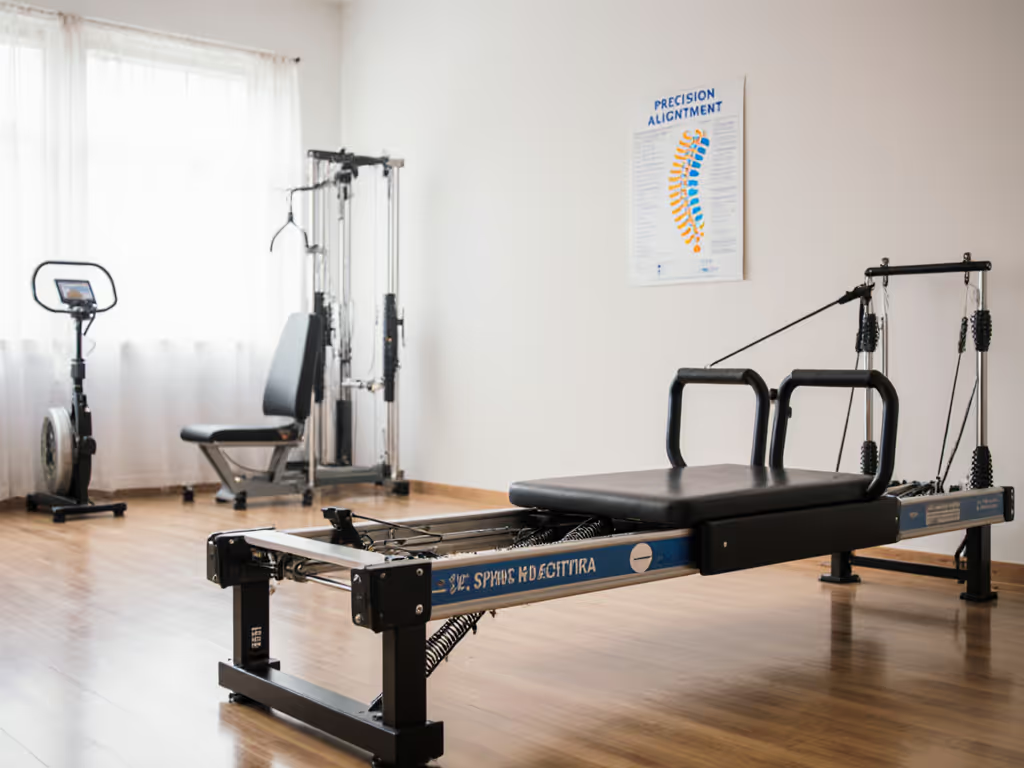
- Visual alignment guides: Body positioning markers help children self-correct without constant instructor intervention
- Controlled rebound mechanisms: Prevents springs from snapping back dangerously during transitions
- Quiet operation: Smooth carriage wheels and spring dampeners maintain focus without startling noises
Micro-studio owners should note that squeaky equipment particularly disrupts children's concentration. One Toronto studio reduced youth class disruptions by 73% after installing rubber-treaded carriage wheels, proof that sensory comfort directly impacts engagement. Children practice longer when they have permission to focus without distraction.
How do I adapt equipment for different developmental stages?
Developmental stage modifications require understanding three key phases:
Early Childhood (6-10 years):
- Use foam rollers instead of footbars for supine work
- Replace springs with resistance bands for gradual strength building
- Limit exercises to supine and seated positions (no standing)
- Keep sessions under 20 minutes with frequent position changes
Early Adolescence (10-14 years):
- Introduce single spring resistance (beginning with light blue)
- Allow limited standing with two-point support (one hand on tower)
- Monitor growth plates at wrists and knees during planking
- Include 30-second "wiggle breaks" every 10 minutes to reset alignment
Late Adolescence (14-18 years):
- Can typically use adult equipment with careful spring selection
- Monitor for gender-specific considerations (girls' wider Q-angle requires hip alignment attention)
- Address growth-related flexibility loss during puberty
- Introduce moderate resistance as bone density peaks
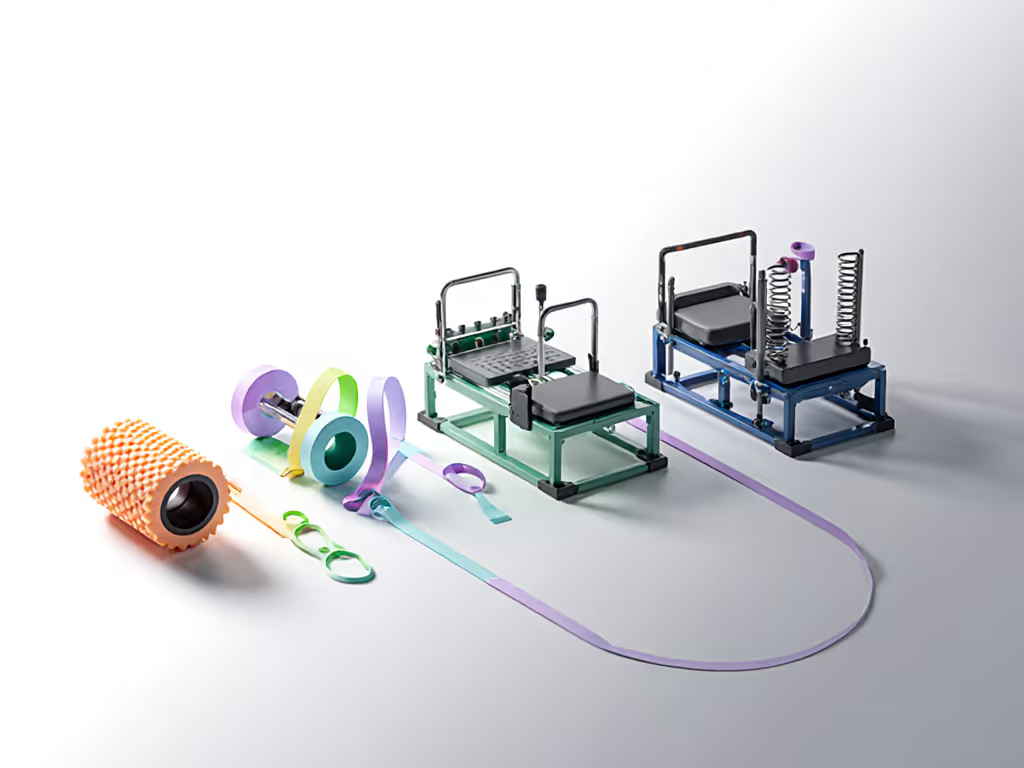
What noise considerations matter for youth practice in residential spaces?
Children's Pilates safety extends beyond physical design to include environmental considerations (especially in apartment settings). Youth practitioners often move with less control than adults, creating more carriage noise during transitions. Consider:
- Spring noise: Children's erratic tension changes create more "spring chatter". Look for progressive resistance springs that minimize this
- Carriage impact: Rubberized carriage stops prevent disruptive thumps during footwork
- Floor vibration: Children's jumping exercises transmit 37% more vibration than adults (per recent biomechanical studies)
- Instructional volume: Younger children require louder cues, potentially disturbing neighbors
One London client resolved noise complaints during her daughter's home practice by placing thick rubber mats under her reformer, reducing vibration transmission by 90% according to her building management's decibel meter. The simple addition of floor pads transformed practice from stressful to sustainable. Quiet setups aren't a luxury, they are essential for consistency. For flooring, matting, and layout tips that cut noise, see our silent small-space setup guide.
How do I choose truly adjustable youth equipment within space constraints?
Finding adjustable youth equipment that fits small spaces requires strategic evaluation:
| Feature | Space-Saver Benefit | Youth Safety Benefit |
|---|---|---|
| Wall-mounted towers | Frees 6-8 sq. ft. floor space | Fixed position prevents tipping hazards |
| Foldable reformers | Stores vertically in closet | Consistent setup reduces misalignment errors |
| Modular accessories | Expand functionality without new equipment | Grow with child through developmental stages |
| Compact footprints | Fits in 4'x6' corner | Prevents awkward positioning in tight spaces |
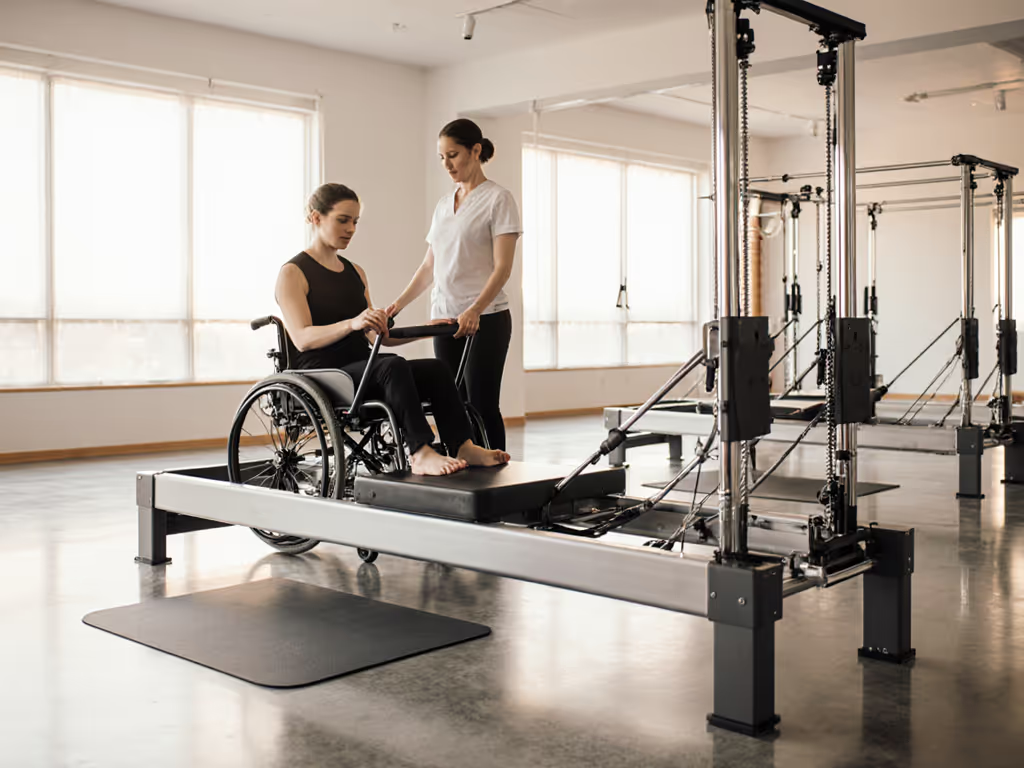
Many "youth-specific" systems compromise on adjustability, do not accept this trade-off. Look for brands offering fine-tuned adjustments (1-inch increments rather than 2-3 inch jumps). If you're weighing wall-mounted towers against reformers in tight rooms, compare options in our tower vs reformer guide for space and noise trade-offs. One Vancouver micro-studio serves clients from 8-78 years on just two reformers by using adjustable shoulder blocks, removable footbar extensions, and variable resistance bands that accommodate all sizes.
When should I consult a specialist before starting youth Pilates?
While Pilates offers tremendous benefits for young bodies, certain conditions warrant professional consultation first:
- Scoliosis (even mild curves require customized spring selection)
- Growth plate injuries (Osgood-Schlatter, Sever's disease)
- Juvenile arthritis or hypermobility spectrum disorders
- Recent fractures (wait until fully healed per orthopedic guidance)
A pediatric physical therapist specializing in movement can provide specific spring recommendations and exercise modifications. For curve-pattern specifics, consult our scoliosis equipment adaptations guide. Never push through pain. Growth-related discomfort differs significantly from beneficial muscle sensation. Remember that quiet practice respects both your neighbors and your child's developing body.
Next Steps for Confident Youth Pilates Practice
Creating a safe, sustainable youth Pilates practice requires attention to both physical specifications and environmental considerations. The right youth Pilates adaptations honor growth patterns while fostering the quiet confidence that transforms exercise from chore to cherished ritual. When equipment accommodates developmental changes without constant disruption, young practitioners develop the consistency that builds lifelong strength, not just temporary gains.
For those exploring equipment options, consider requesting demo units that allow testing with your specific space constraints. Measure ceiling heights before purchasing tower systems, and verify weight limits accommodate your child's projected growth. Seek brands providing detailed spec sheets rather than marketing fluff, real data helps make informed decisions.
Your journey continues with thoughtful experimentation. Begin with basic mat work to assess your child's natural alignment before introducing equipment. Notice where they seek extra support or struggle with transitions, these observations guide your equipment choices more than any product description. When setup aligns with developmental needs and environmental realities, you give your young practitioner the most valuable gift: permission to focus.
Related Articles