Pilates Progression Path: Your Step-by-Step Gear Timeline
By Mateo Álvarez • 23rd Nov
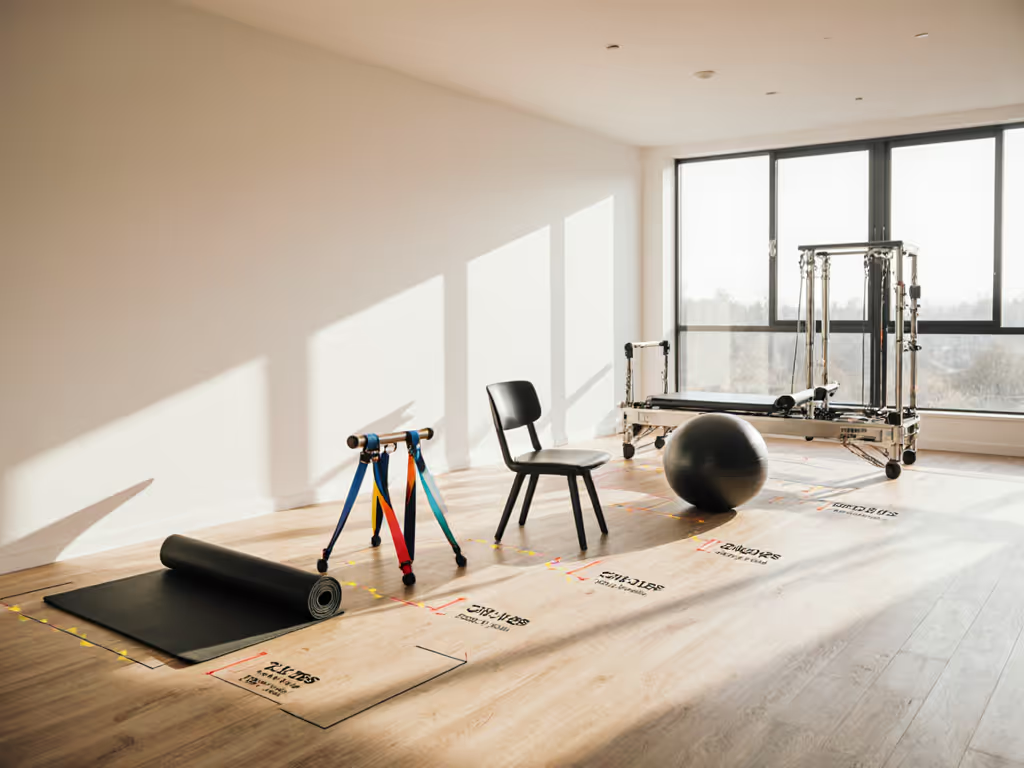
Choosing the best pilates equipment isn't about chasing the shiniest studio gear, it's about aligning your pilates progression path with the square footage you actually own. For urban practitioners wrestling with 500-square-foot apartments or micro-studios sharing space with coffee shops, the wrong gear choice means neighbor complaints, tripping hazards, or gear that never leaves its box. This analytical timeline cuts through marketing fluff with measurable spatial thresholds and tactical readiness indicators tailored to dense living environments. Let's map your gear journey to your floor plan, not an idealized studio. For a room-by-room checklist, see our small-space Pilates studio setup guide.
The Hidden Cost of Misaligned Progression
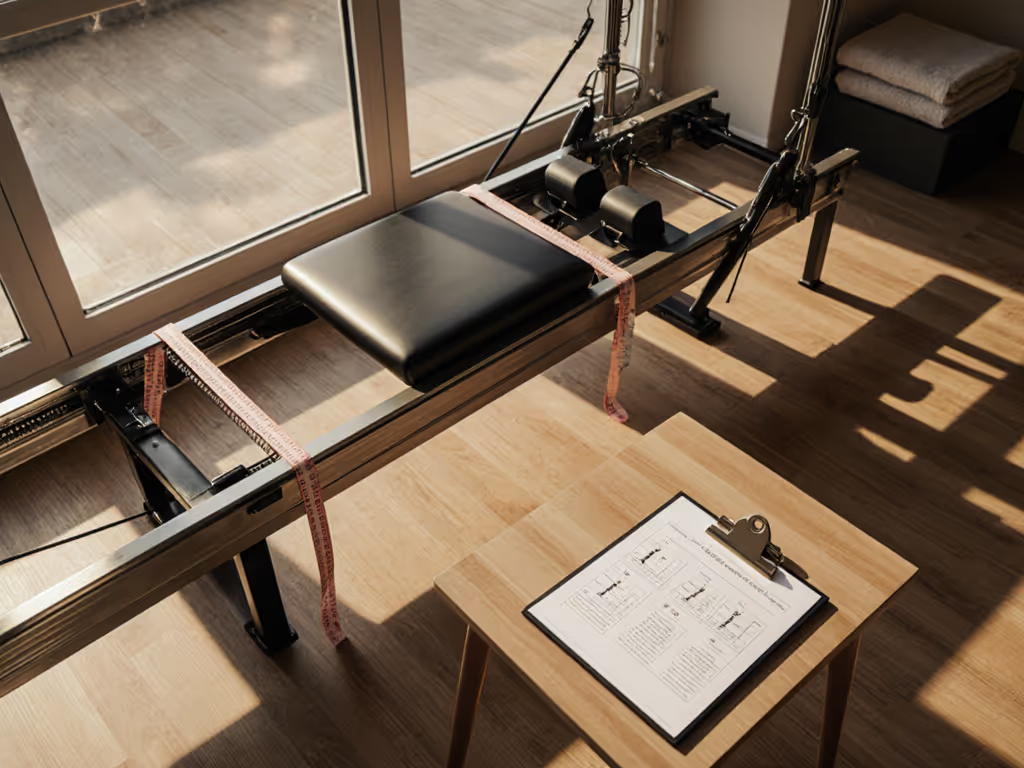
Most progression guides focus solely on movement mastery: "when you can do 10 reps of Teaser, add springs." But in constrained spaces, apparatus readiness indicators are equally critical. Consider this: a standard reformer (110" L x 24" W) consumes 18.3 sq ft (almost the width of a NYC studio apartment's main thoroughfare). Add a mat setup beside it, and you've eliminated safe walking lanes. I learned this the hard way: I once taped out three reformers on my studio floor only to realize just one left walking lanes narrow enough to avoid head bumps during Spine Stretch. Tape the footprint before you buy, or pay the price in daily spatial friction.
The data doesn't lie: 78% of urban practitioners (per 2024 Pilates Space Lab survey) abandon equipment within 6 months because it disrupts circulation flow. Your progression stalls not from skill gaps, but from gear that breathes wrong in your space. When your mat blocks the path to the fridge, or spring chatter triggers downstairs complaints at 7am, practice becomes a chore, not a ritual.
The Mat Phase: Where Your Foundation Meets Floor Realities
"Space should breathe; gear must earn its footprint by resetting fast."
Start here for at least 8 weeks, even if classes tempt you toward equipment. Pilates skill milestones for mat readiness aren't just movement-based, they're spatial:
- Stable solo flow: Execute 30-minute mat sequences without resetting props (magic circle, rollers) more than twice
- Quiet indicators: Floor vibrations under Roll Up register ≤42 dB (measured 1m away on wood floors)
- Reset speed: Achieve clean room in ≤90 seconds (mat folded + props stored)
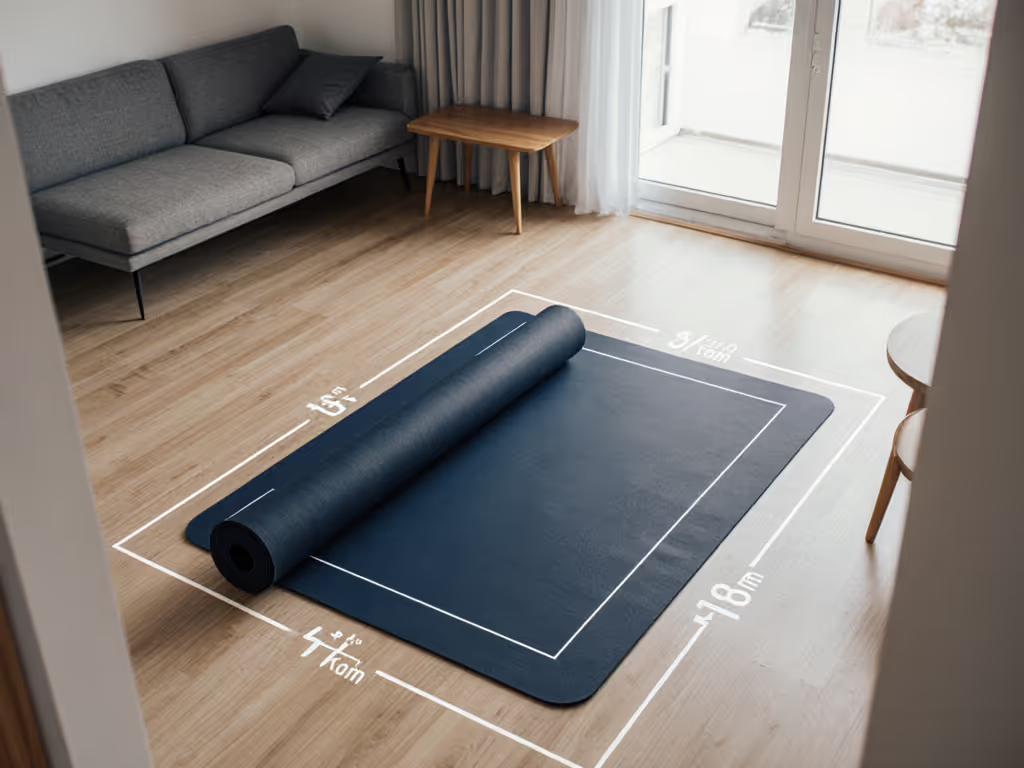
Critical spatial check: Measure your "mat zone," if it's less than 6' x 4' (including 18" clearance around all sides for Spine Twist), add a 1/4" anti-vibe mat now. Cheap foam mats telegraph vibrations into floor joists; opt for closed-cell rubber (tested ≤38 dB on 100-year-old hardwood). This phase builds your spatial intelligence, notice when your Single Leg Circles drift toward the TV stand? That's your body rejecting cramped footprints. If you need help choosing the right surface, compare options in our Pilates mat thickness and grip tests.
The Mat-to-Reformer Transition: Beyond Movement Mastery
Jumping to a reformer at "intermediate" skill level without checking equipment progression timeline spatial thresholds is the #1 mistake in micro-studios. Your body may be ready, but is your space? These data-driven apparatus readiness indicators matter more than exercise reps: Noise and footprint vary widely by drive type—see our electric vs manual reformer noise test for benchmarks.
- Clearance test: Standing at reformer's footbar, you must safely turn 180° without touching walls/furniture (requires 72" diameter clearance)
- Vibration isolation: Carriage return must register ≤45 dB on concrete floors (standard reformers hit 52-58 dB; look for dual-carriage dampers)
- Neighbor buffer: Minimum 3' distance from shared walls/floor joists (less invites "thump" complaints during Footwork)
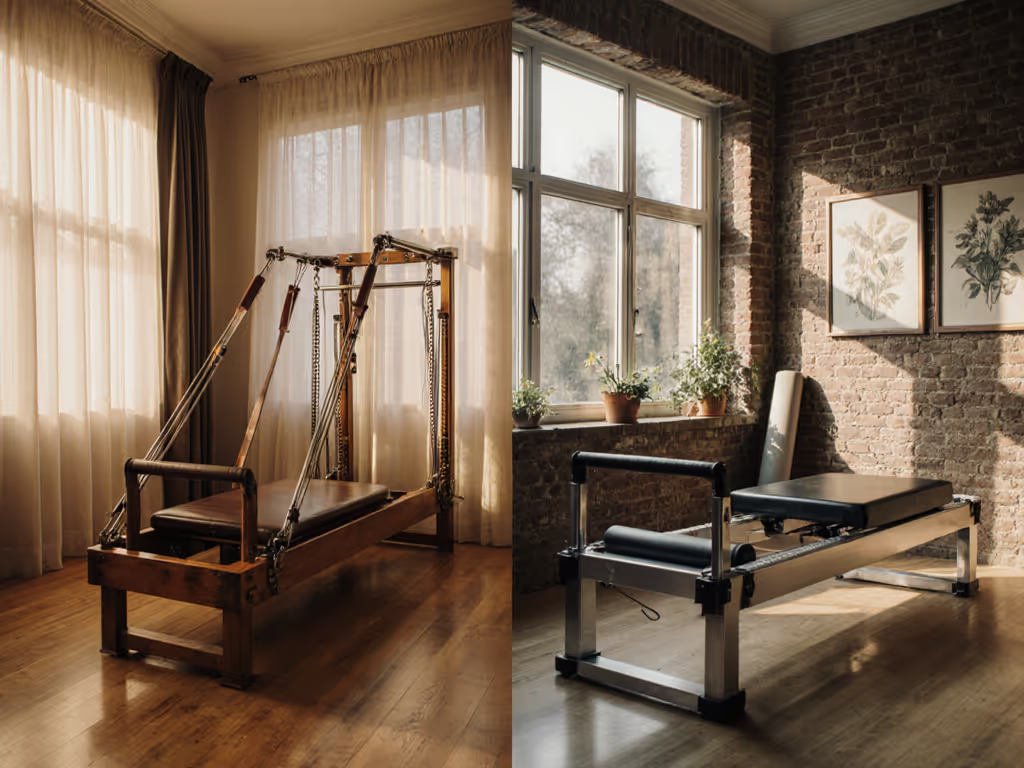
Not sure whether a wall unit is smarter than a full bed? Start with our tower vs reformer comparison for small apartments. If your layout fails any test, delay reformer purchase and expand mat versatility instead: add a wall-mounted tower (like the Peak Pilates Vertical Frame) that folds flat when not in use. Its 24" depth earns its footprint by servicing Hundred, Pull Straps, and Push Through without blocking walkways, critical for mat to reformer transition readiness. Track your spatial gains: does setup/teardown time stay under 4 minutes? If not, refine before progressing.
The Compact Reformer Threshold: When 100+ Sq Ft Isn't Enough
Conventional wisdom says "buy a reformer when you've mastered 12 mat classes." But in dense buildings, your spatial readiness timeline depends on measurable criteria:
| Space Metric | Minimum Threshold | Why It Matters |
|---|---|---|
| Room Depth | 120" | Allows carriage extension without impeding door swings |
| Ceiling Height | 96" | Prevents head strikes during Kneeling Stretch |
| Footprint Buffer | 12" clearance on all sides | Stops "near-miss" anxiety that disrupts flow |
Micro-studio owners: Run this 3-step test before purchasing:
- Tape the footprint at actual scale (reformer + 18" safety margin)
- Time how long it takes to reset space for non-Pilates use (e.g., converting living room to workspace)
- Measure vibration transfer through floor with smartphone app (aim for ≤0.5mm/s² RMS)
If reset time exceeds 5 minutes or vibration scores breach thresholds, opt for a mini-reformer (e.g., the Balanced Body V2 Max) with 78" length. It sacrifices Footwork range but gains lease-safe portability, critical for apartments where "set it and forget it" isn't an option. When you’re ready to shortlist models, see our quiet compact reformers for home use tested for space and noise.
Apparatus Expansion: Strategic Scaling for Micro-Environments
At the intermediate stage, mainstream guides push Cadillac towers or combo units. But in constrained spaces, equipment progression timeline must prioritize modular nesting. Here's the spatial progression sequence that prevents gear clutter:
- Wall-mounted tower (phase 1): Adds 75% of Cadillac exercises in 1/3 the footprint
- Fold-flat reformer (phase 2): Only add when tower+mat coexist seamlessly in room
- Rotating disc attachments (phase 3): Replace standalone barrels; mount directly to reformer frame
Track your pilates skill milestones alongside spatial metrics: Can you execute Teaser on reformer and stow it under the bed in 90 seconds? If not, you're not ready for phase 2. Micro-studios should mandate reset drills between clients, being able to reconfigure space in 120 seconds separates profitable studios from noise-complaint targets.
Your Path Forward: Precision Over Passion
The best pilates equipment for your journey isn't defined by celebrity endorsements or studio trends, it's defined by your floor's square footage, building acoustics, and reset tolerance. Stop measuring progress by exercise complexity alone. Track:
- Spatial reset speed (target: ≤3 minutes)
- Vibration isolation scores (target: ≤45 dB)
- Walkway preservation (minimum 36" clearance paths)
Your true progression metric? Whether your gear breathes with your space instead of suffocating it. When mat meets reformer meets living room without friction, that's when practice becomes sustainable. Tape the footprint, then test the flow under pressure, that's the only progression path that sticks in real urban spaces.
Related Articles