Master Pilates Spring Mechanics: Your Resistance Tuning Guide
By Mateo Álvarez • 26th Nov
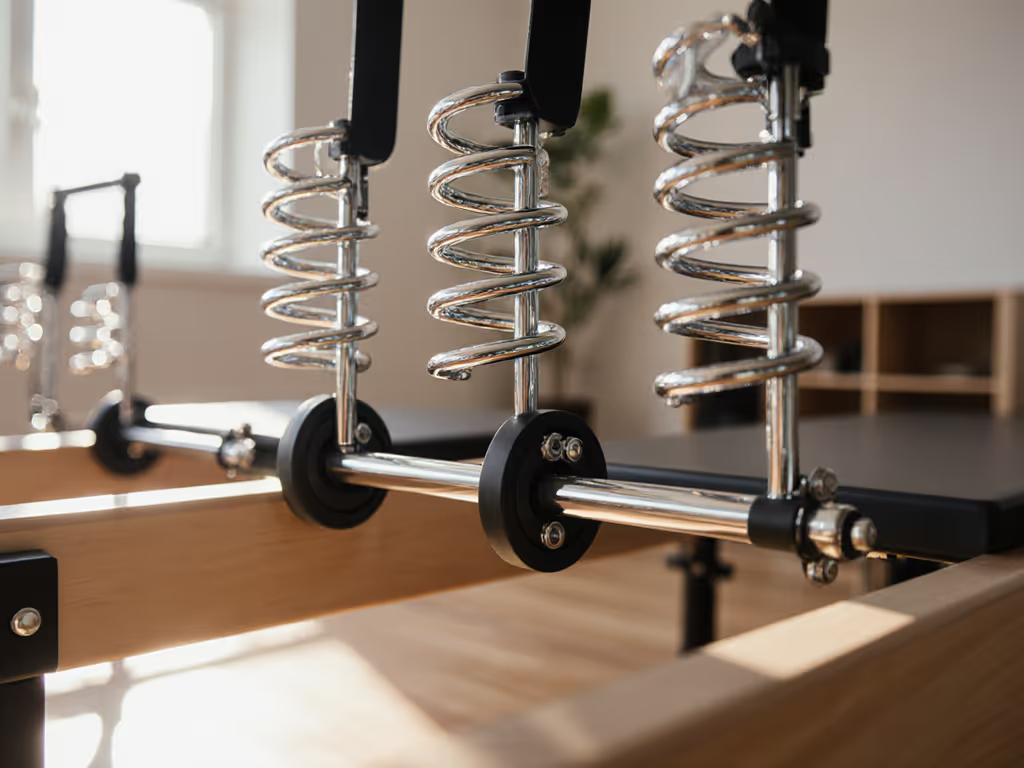
Master Pilates Spring Mechanics: Your Resistance Tuning Guide for Small Spaces
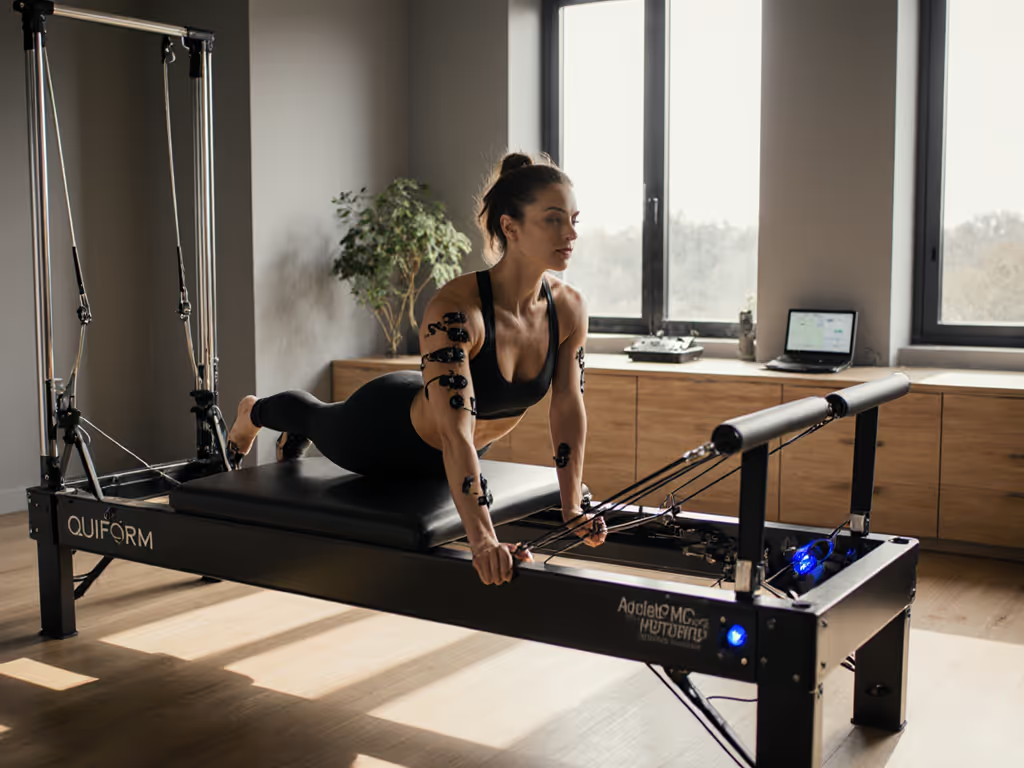
Understanding pilates spring mechanics transforms your compact studio from a cluttered compromise into a precision instrument. When space is non-negotiable, your pilates resistance systems must earn every inch of footprint, not just deliver resistance, but intelligent resistance that minimizes vibration, maximizes movement flow, and resets between clients. Forget showroom specs; we're decoding springs through the lens of thin-walled apartments and micro-studio fire codes where carriage thumps travel through floor joists and yellow springs vibrate differently on concrete vs. engineered wood. If you're still planning your room layout, see our silent small-space studio setup guide for flooring, lighting, and placement that reduce vibration at the source.
Why Standard Spring Guides Fail You in Tight Quarters
Most color-coded spring charts (yellow=light, red=medium, etc.) assume ideal studio acoustics, high ceilings, sprung floors, and zero neighbor anxiety. But in your 12'x10' home studio above a dentist's office? That same yellow spring might transmit subtle vibrations through subfloors when combined with certain carriage speeds. I once taped out three reformers on my studio floor, then realized only one left safe walking lanes. That day I started treating floor plans like choreography. Every hinge, caster, and wall stud matters when clients move, so I design layouts that breathe, fold, and reset between classes.
Space should breathe; gear must earn its footprint by resetting fast. Your springs aren't just about resistance, they're vibration dampeners, balance stabilizers, and noise regulators. Here's how to audit them:
The Hidden Physics: Springs as Spatial Engineers
Spring Tension = Floor Impact
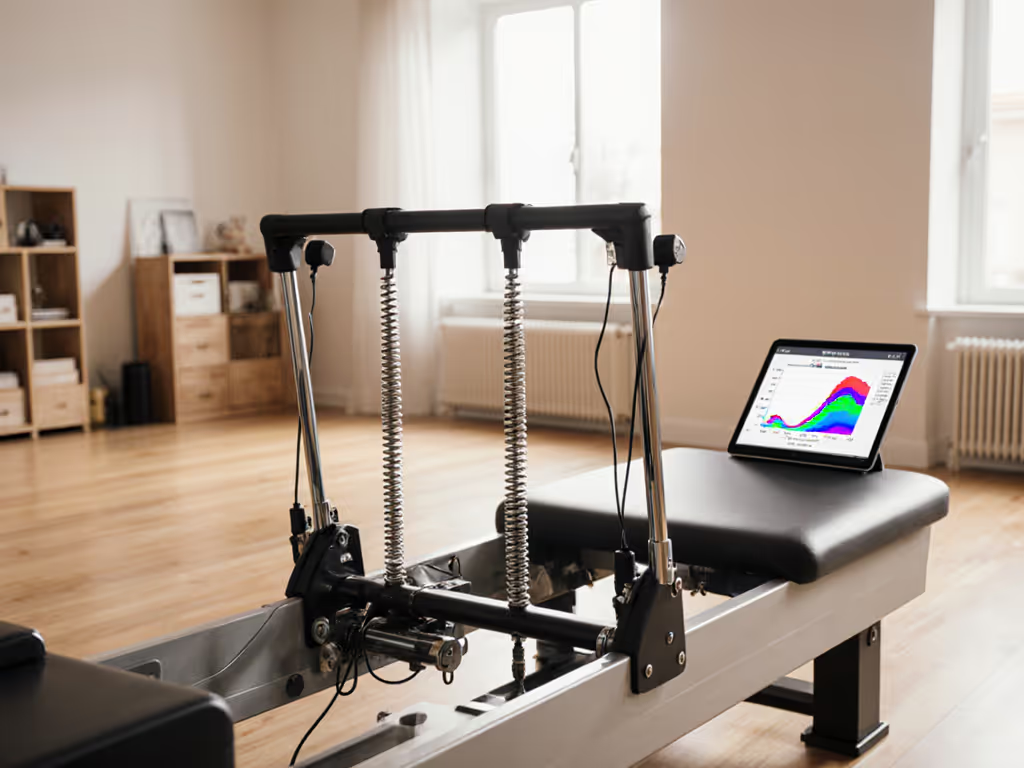
Springs dictate more than workout intensity, they determine how force transfers to your floor. Consider:
- Lighter tension (yellow/blue): Creates smoother carriage returns but less damping during eccentric movements (e.g., slow leg extensions). Risk: Increased "spring chatter" on hard surfaces.
- Heavier tension (green/red/black): Absorbs more kinetic energy during dynamic motions but can transmit low-frequency thumps through floor joists if not isolated.
A 2024 industry study confirmed springs lose 15% damping efficiency after 18 months of regular use, critical for renters where floor vibrations trigger lease violations.
Your Spring Configuration Checklist
Before setting foot on the carriage, run this tape-and-test flow:
- Measure clearance zones: Allow 36" minimum behind carriage for full extension (prevents wall impacts)
- Test vibration pathways: Place phone vibration sensor on floor during footwork at 3 spring tensions
- Map resistance transitions: Note where spring tension shifts during exercises (e.g., leg circles peak tension at 90°)
- Verify reset time: Can you switch from 2-yellow to 1-red/1-blue setup in <90 seconds?
This isn't gym math, it's spatial physics. For instance, Balanced Body's springbar system (using yellow/blue/red/green) allows 46 resistance combinations, but micro-studios prioritize settings where both springs detach with one hand. Why? Because resetting between clients eats into billable hours. Lease-friendly layouts demand tool-less transitions.
Decoding Your Resistance Level Selection
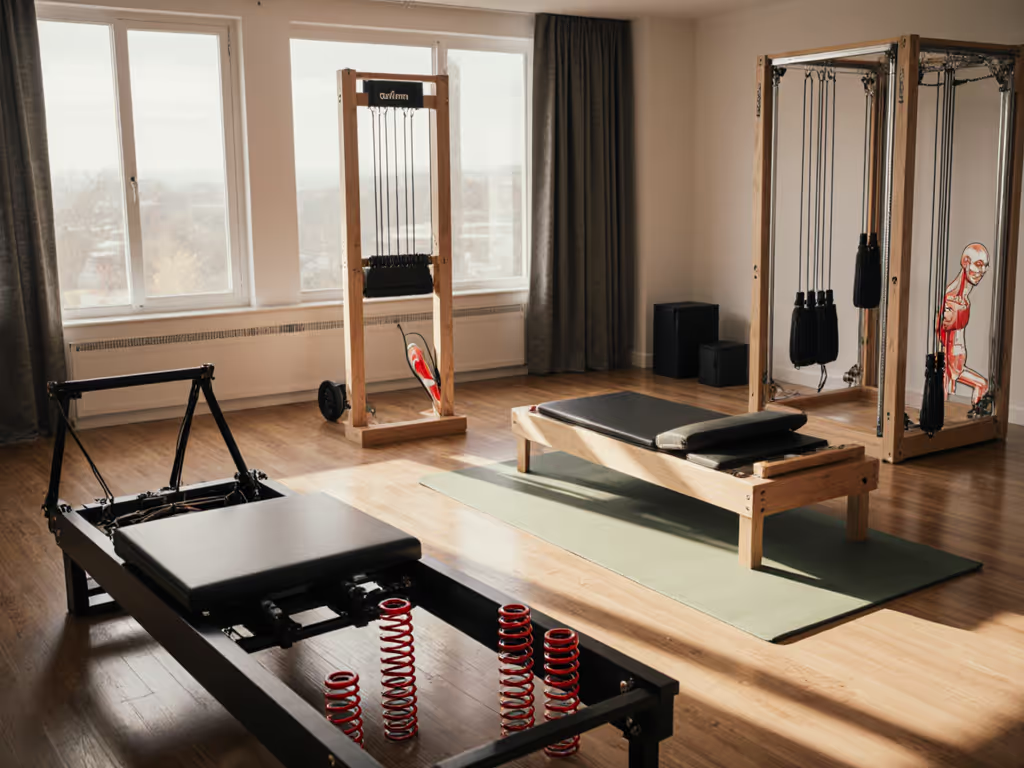
Brand-specific color systems cause confusion we can't afford in tight spaces. Cross-reference this simplified chart:
| Resistance Level | Typical Colors | Space-Smart Configuration | Vibration Risk |
|---|---|---|---|
| Beginner | 1 yellow | Carriage nearest wall | Low (if floor-protected) |
| Intermediate | 1 yellow + 1 blue | Centered in room | Medium (dampen with mat) |
| Advanced | 1 red + 1 green | Against exterior wall | High (requires anti-vibe platform) |
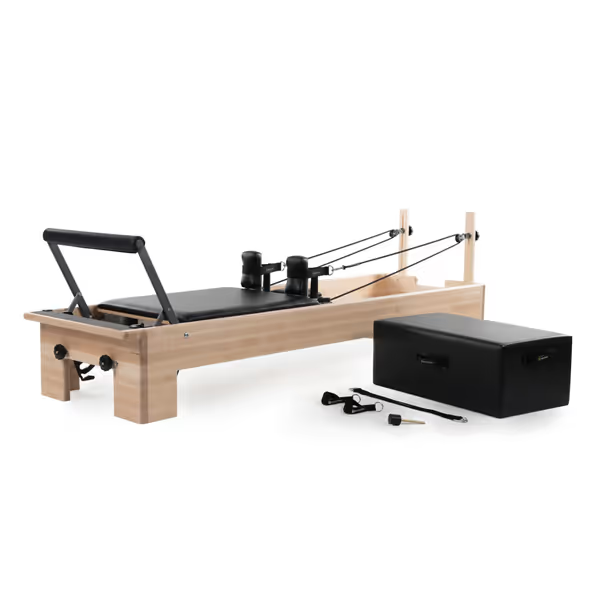
Balanced Body Studio Pilates Reformer
Studio-grade Pilates for a smooth, quiet workout at home.
$4600
Resistance Levels46
Resistance Levels46
Pros
Ultra-smooth, quiet precision carriage system.
Durable, beautiful solid maple construction.
Versatile with included sitting box and adjustable features.
Cons
Premium investment for home use.
Customers find the reformer to be well-built, with one noting it's made in the USA, and appreciate its strong wood construction. The equipment is easy to set up, and customers consider it worth the investment.
Customers find the reformer to be well-built, with one noting it's made in the USA, and appreciate its strong wood construction. The equipment is easy to set up, and customers consider it worth the investment.
Critical nuance: Two yellow springs ≠ one red spring. With Balanced Body's system, two yellow springs deliver 20% less resistance than one red (per source 1). For taller users (5'10"+), that difference means avoiding excessive carriage travel toward walls, directly impacting your required clearance zones. If you’re 5'10" or taller, compare extended-carriage reformers to maintain full range without crowding walls. Always prioritize movement range over resistance color charts.
The Reset-First Workflow: Springs for Micro-Studio Flow
Your spring choices should enable 3-minute station resets. Forget "ideal" resistance, you need adaptive resistance. Try this: If jumpboard cardio is part of your flow, see our quiet jumpboard attachment test to pick a board that won’t wake the neighbors.
- Morning clients: 1 yellow spring (quiet, low-floor-vibration for early hours) → Reset step: Slide tower against wall, fold Jumpboard under carriage
- Prime time: 1 red + 1 blue (max resistance within 24" clearance) → Reset step: Detach springs in <20 sec using TwistLock shoulder rests
- Evening recovery: 2 green (heavier resistance for controlled movement) → Reset step: Stow springs in wall-mounted rack
This creates dynamic circulation lanes that accommodate off-peak cleaning and neighbor-sensitive hours. Notice how spring selection precedes spatial planning, not the reverse. Heavy springs demand wider reset buffers; light springs allow tighter nesting.
Maintenance = Noise Prevention
Springs aren't forever. Replace them at first sign of:
- Audible "ping" during transitions
- Carriage drift (more than 2" after release)
- Uneven resistance in full extension
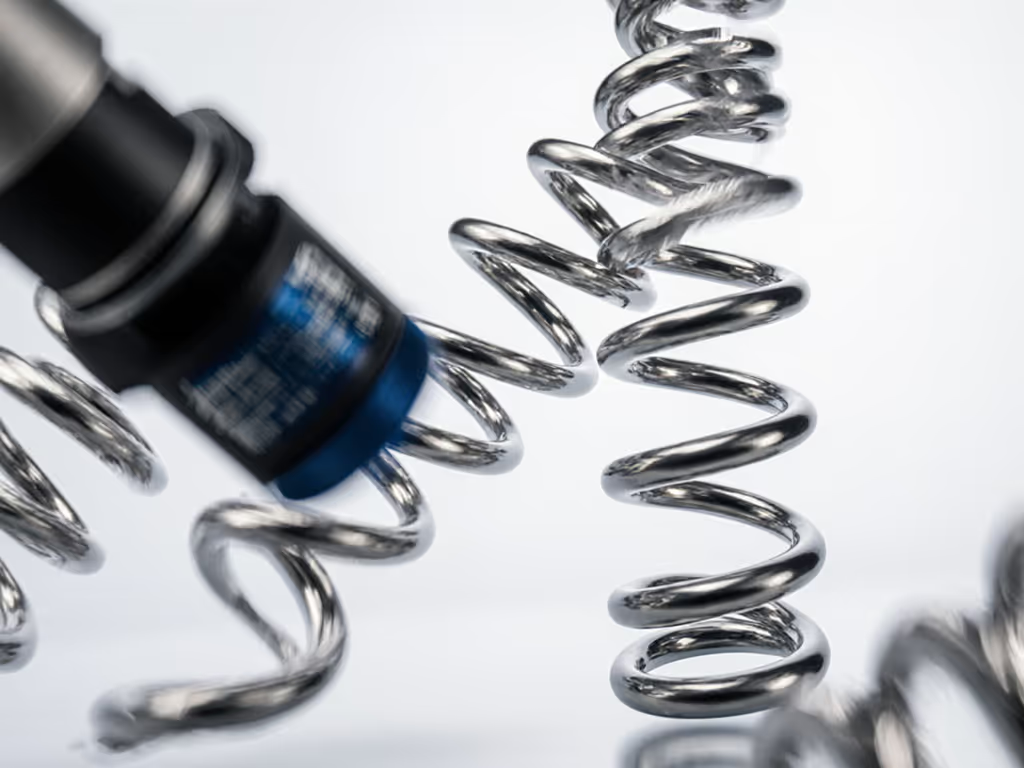
A worn spring transmits 40% more vibration (per Return Pilates' 2025 maintenance data). For step-by-step upkeep beyond springs, follow our reformer maintenance guide to keep the whole machine quiet. For apartment dwellers, this is lease-compliance calculus. Clean springs monthly with a dry cloth, never lubricants that attract dust into floor joints.
Final Adjustment: Your Space is the Seventh Spring
Your room's dimensions, floor type, and ceiling height interact with springs as powerfully as any color code. In low-ceiling studios (under 8'), avoid heavy springs that force exaggerated arm movements toward beams. On squeaky hardwood? Prioritize configurations where carriage stays within the central 60% of rails, minimizing end-point impacts.
Mastering pilates spring mechanics means treating resistance as spatial choreography. When your springs reset fast and breathe between sessions, you've earned their footprint.
Tape the footprint, then test the flow under pressure.
Ready to optimize your layout? Measure your room's vibration zones first, then we'll match springs to your unique architecture. Because quiet resistance isn't a bonus; in shared spaces, it's the foundation.
Related Articles