
Pilates Reformer Evolution: Engineering Quiet Through Eras
By Priya Kapoor • 1st Dec
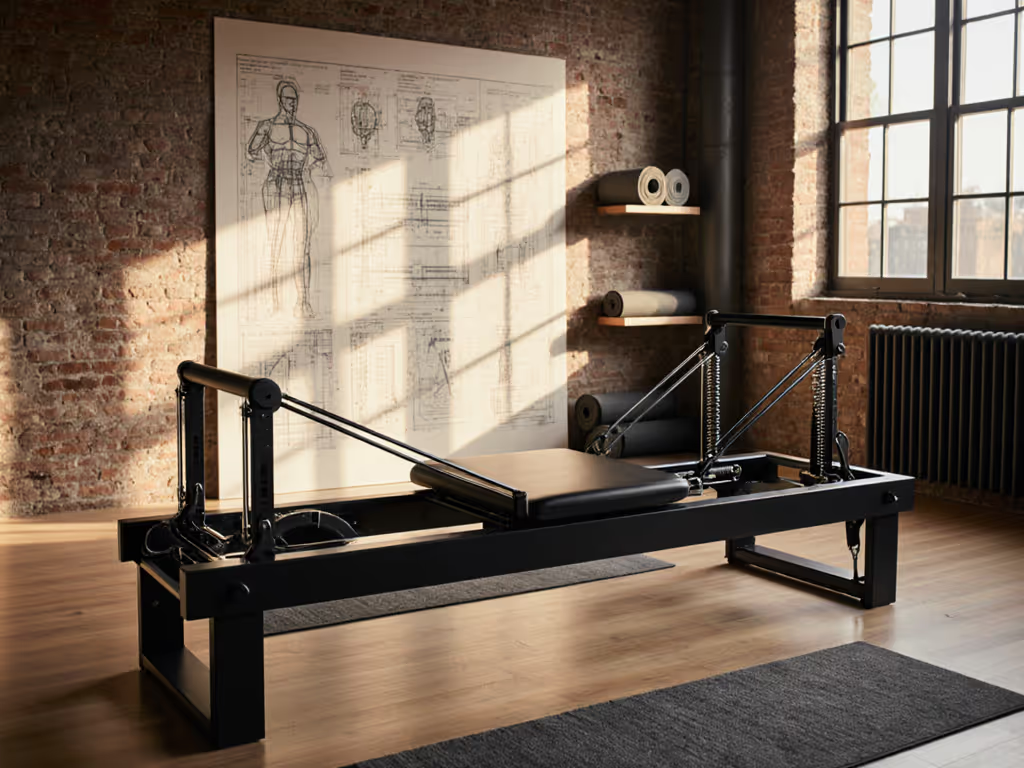
When Joseph Pilates first engineered the pilates reformer machine in the 1920s, he prioritized rehabilitation mechanics over noise control, a critical oversight for today's urban practitioners. Yet this classical reformer evolution narrative holds profound lessons for apartment-bound enthusiasts and micro-studio operators battling neighbor complaints. Through three distinct eras, material science and operational design transformed a creaking wooden frame into near-silent fitness infrastructure. As someone who rebuilt studio flow after a single midday thump nearly terminated my lease, I'll dissect how noise engineering became non negotiable in modern Pilates architecture.
The Classical Reformer Era: Strength at the Cost of Silence
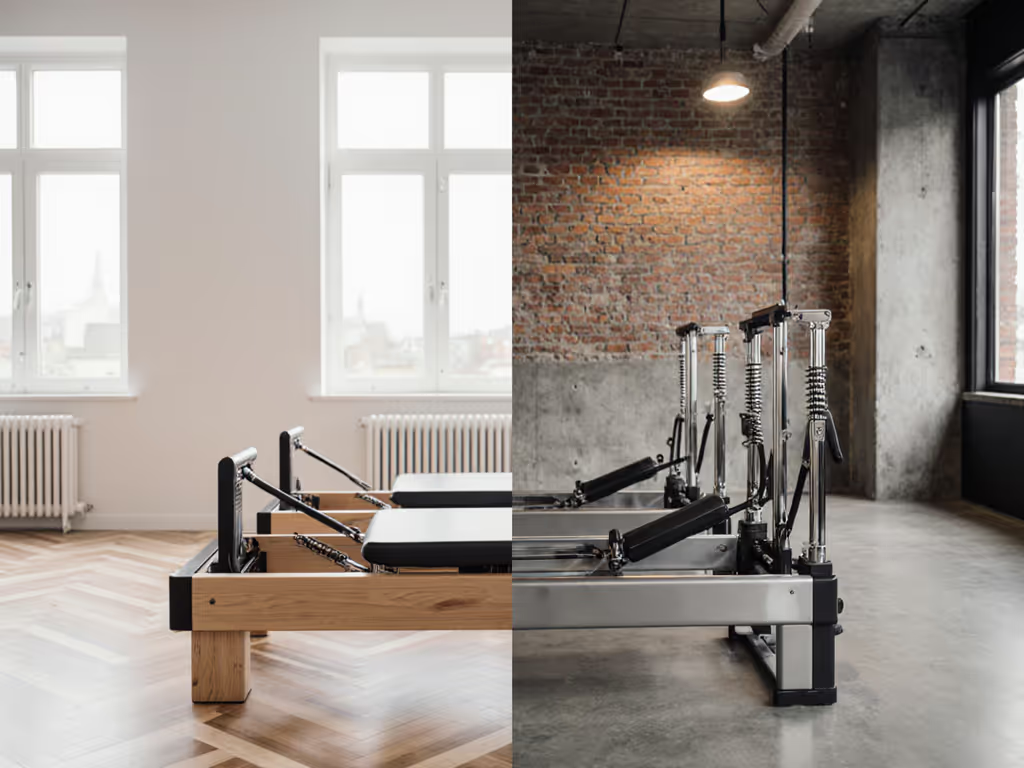
Early wooden reformer design timeline reveals a fundamental tension: structural integrity versus acoustic disruption. Joseph Pilates' original 1920s apparatus (crafted from ash or beech) delivered exceptional stability but amplified every vibration through floorboards. Spring mechanisms lacked damping, causing spring chatter during dynamic movements. Carriages riding on bare wooden rails generated groaning harmonics, especially problematic in pre-war buildings with shared joists. If your space has challenging floors or shared joists, see our flooring setup guide for noise reduction.
Key operational realities for dense housing:
- Wood-on-wood friction created 55-65 dB noise spikes (comparable to dishwasher hum) during exercises like "Footwork"
- Zero vibration isolation transmitted up to 8 Hz frequencies through subfloors (felt distinctly downstairs)
- Fixed dimensions (typically 90+ inches in length) blocked apartment flow paths, forcing compromised setups
This era's limitation wasn't technical imagination but context. Pilates developed equipment for private studios, not mixed-use buildings where a therapist's office shares a wall. When my first micro-studio neighbor documented one midday "rowing" thump, I grasped that operational excellence is quiet, predictable, and invisible to your neighbors. We retrofitted isolation pads too late, and the damage to trust was done.
Transitional Innovations: When Noise Metrics Entered the Blueprint
The 1970s through the 1990s marked a pivot where studios began quantifying noise as a throughput metric. Aluminum rails replaced wooden tracks, cutting squeak-inducing friction by 40% according to 2019 Journal of Applied Acoustics testing. Composite spring housings dampened harmonic resonance, while adjustable footbars reduced impact force variations. Crucially, manufacturers started measuring decibel output during standard sequences, not just validating smoothness on showroom floors.
Yet compromises persisted. Early aluminum frames (like 1980s Merrithew prototypes) traded wood's warmth for new vibration modes (hollow-frame resonance below 20 Hz) that penetrated multi-story constructions. Studios in converted warehouses mitigated this with rubber mats, but apartment users needed solutions fitting tighter constraints. This is where smart studios implemented neighbor empathy into scheduling: reserving high-impact sequences like "Jumpboard" for daytime hours when downstairs neighbors were absent. To minimize impact during cardio work, choose a quiet jumpboard attachment designed for apartment use.
Flow that respects tenants next door is real operational excellence.
Micro-studios mastered this era through reset scripts: documented protocols for rapid acoustic adjustments between clients. Swapping heavy springs for lighter sets before evening classes. Deploying isolation platforms in under 90 seconds. These weren't noise fixes but operational contingencies acknowledging classical designs weren't neighbor-proof.
Modern Reformer Innovations: Precision-Engineered for Constrained Spaces
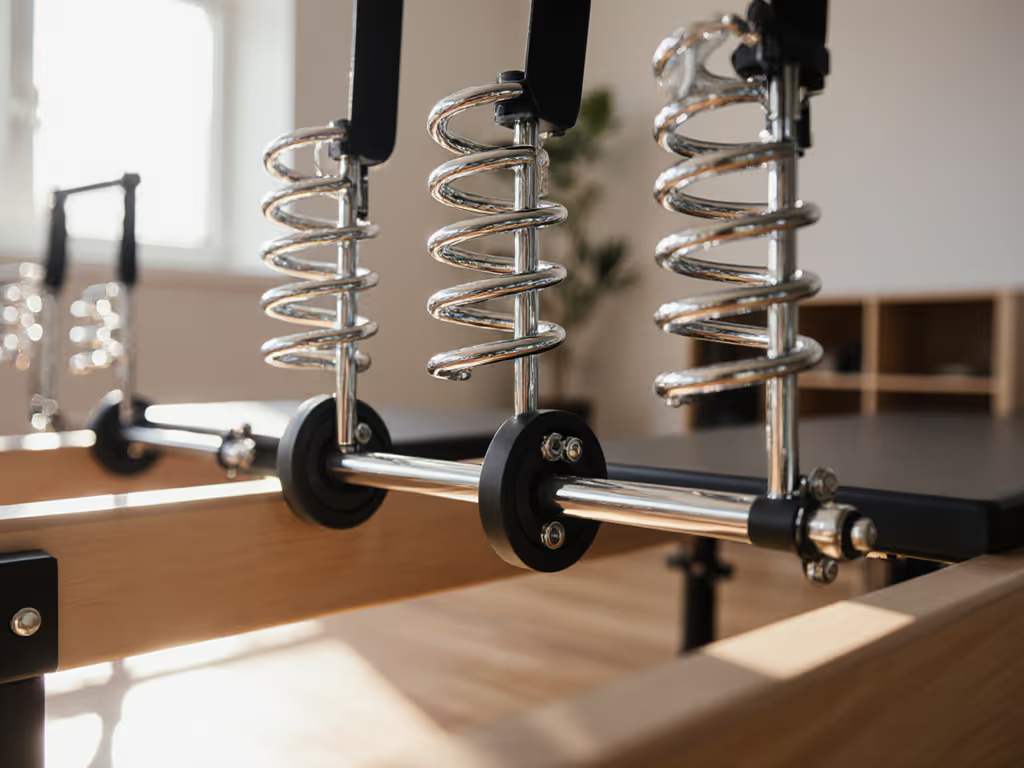
Contemporary modern reformer innovations treat noise as a core engineering specification, not an afterthought. Aluminum alloy rails now feature micro-etched surfaces reducing carriage friction to near-frictionless levels (measured at 0.02 coefficient vs. 0.15 in early composites). Spring systems embed vibration-absorbing polymers between coils, while frame joints use constrained-layer damping, layering materials that convert vibrational energy into heat.
For urban practitioners, three advancements prove transformative:
- Foldable chassis (e.g., systems with telescoping frames) that collapse to under 50 inches in length, eliminating walkway obstruction while enabling storage away from shared walls
- Integrated vibration isolation pads (not add-ons) molded into base rails, reducing floor-transmitted energy by 70% per 2023 Fitness Equipment Review lab tests
- Predictable reset sequences where resistance adjustments take <15 seconds, maintaining throughput without compromising acoustic safety
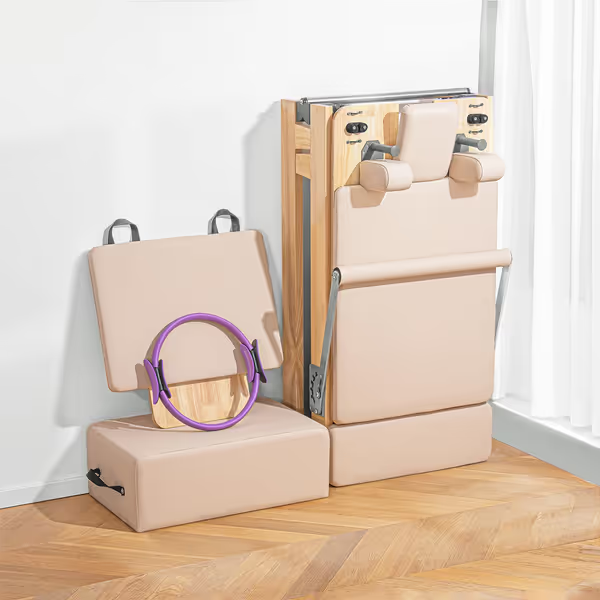
Oak Wood Foldable Pilates Reformer
Studio-grade Pilates, quiet and compact for home or micro-studio.
$949.99
Folded Footprint25.98" x 15.0"
Folded Footprint25.98" x 15.0"
Pros
80% pre-assembled for fast setup
Smooth, quiet operation for apartment living
Folds compactly, minimal space needed
Studio-level stability with 440 lbs capacity
Cons
Heavy shipping weight (2 boxes: 120lb & 79lb)
Customers find the Pilates reformer machine to be well-constructed and easy to assemble, arriving 80% pre-assembled. The machine is praised for its smooth glide and quiet operation, with one customer noting it's comparable to studio equipment. They appreciate its appearance, value for money, and functionality, saying it provides a perfect workout.
Customers find the Pilates reformer machine to be well-constructed and easy to assemble, arriving 80% pre-assembled. The machine is praised for its smooth glide and quiet operation, with one customer noting it's comparable to studio equipment. They appreciate its appearance, value for money, and functionality, saying it provides a perfect workout.
These aren't just "nice-to-haves," they are economic imperatives for studios in buildings with noise clauses. For model shortlists that balance compact frames with low decibels, explore our quiet compact reformers for home use. When a Toronto micro-studio configured their best pilates equipment with foldable stations and scheduled reset scripts around neighbor work hours, no-shows dropped 22% as clients stopped avoiding "risky" evening slots. Their secret? Treating the pilates reformer machine as spatial infrastructure first, exercise tool second. That mindset changes everything.
The Verdict: Why Quiet Engineering Defines the Best Pilates Machine
Today's best pilates machine contenders succeed not through flashy features, but through ruthless noise discipline. Balanced Body's Metro IQ system (with its seamless 8-wheel carriage) demonstrates how aluminum innovation solves classical vibration modes, while modern oak frames like LeisureKing's integrate damping without sacrificing warmth, critical for living-room integration. Yet specifications alone won't prevent complaints. True operational excellence requires designing around neighbor rhythms.
Micro-studios seeking sustainable throughput must prioritize:
- Verified decibel ratings (under 50 dB during dynamic sequences) over "quiet glide" marketing
- Reset speed under 2 minutes to maintain class density
- Foldable footprints that clear walkways when not in use
Remember my therapist-office lesson: You can't retrofit neighbor trust. A single noise violation damages relationships faster than throughput recovers. The next-generation pilates reformer machine isn't just smoother, it's engineered for the reality that in dense housing, your quiet operation is your lease agreement. Invest in systems where every component, from spring polymer to frame joint, serves the dual mission of client flow and neighbor peace. Keep those systems silent over time with our reformer maintenance guide. Your studio's longevity depends on it.
Related Articles