
Microgravity Pilates: NASA's Space-Adapted Exercise Principles
By Nora Bergström • 22nd Jan

When choosing the best pilates equipment for small-space training, inspiration might seem worlds away. Yet NASA's microgravity pilates-adjacent research offers profound lessons for urban practitioners: in constrained environments (whether orbiting Earth or sharing thin-walled apartments), quiet movement is foundational to consistency. Astronauts combat muscle atrophy in zero-gravity not with brute force, but through precision engineering that minimizes sensory disruption. For apartment dwellers fearing neighbor complaints or unstable floor vibrations, these space-tested principles translate into serene, sustainable home practice. For small-footprint options that won’t disturb neighbors, see our best apartment Pilates equipment guide. Let's adapt four NASA-derived strategies for your comfort-first setup.
Step 1: Prioritize Silent Mechanics Over Raw Power
NASA's SPRINT exercise program (studied during 70-day simulated microgravity) revealed a critical insight: muscle preservation hinges not on intensity alone, but on smooth, consistent movement quality. In the 2024 Journal of Applied Physiology study, researchers noted that even low-dose resistance training protected quadriceps health when mechanics were precise and vibration-controlled. For astronauts, jerky movements or equipment rattle could disrupt delicate station operations, much like noisy springs or clattering carriages disrupt your peace (and patience) in shared housing.
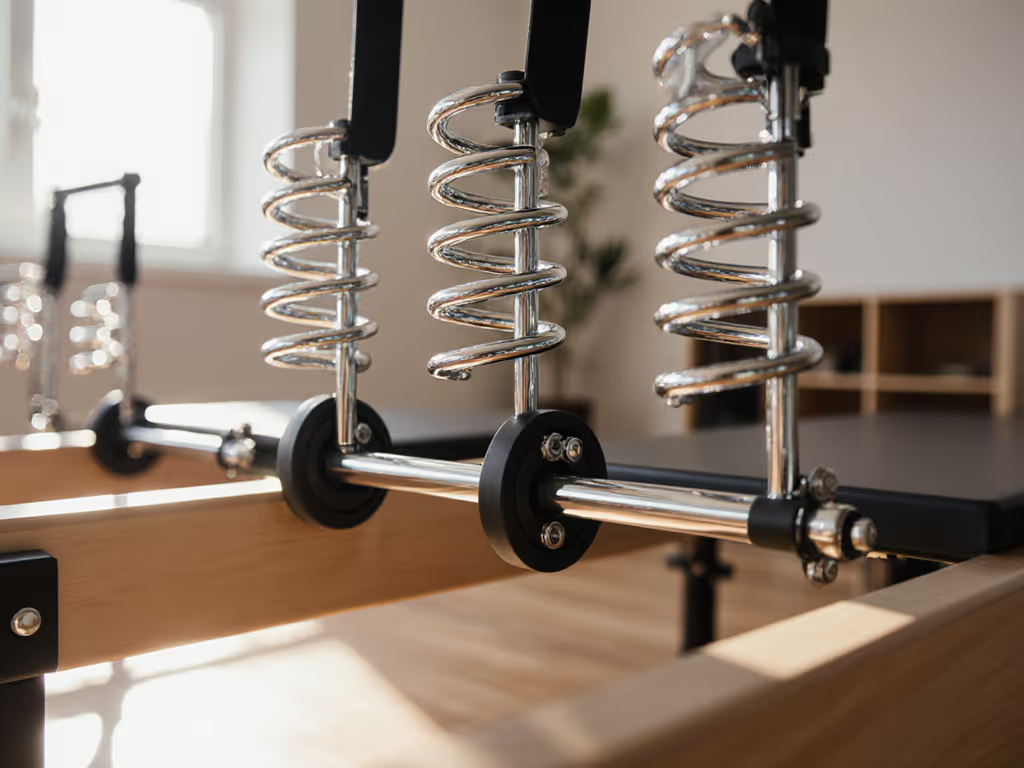
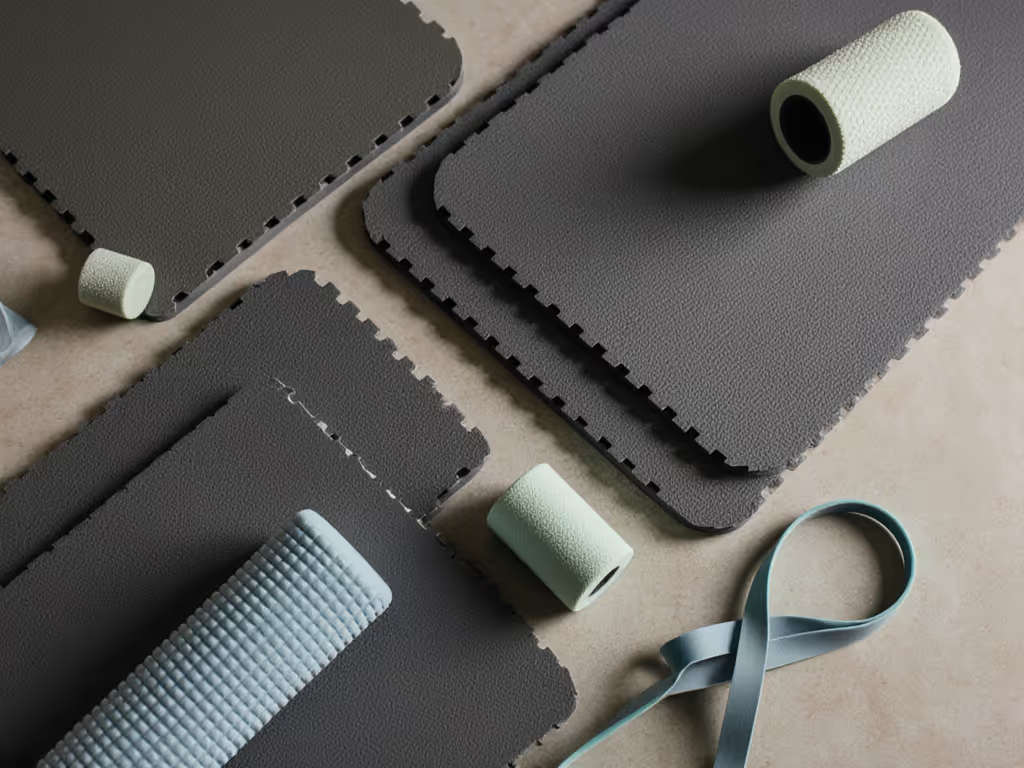
Comfort-first setup tip: Audit your equipment's transition points. When springs shift during footwork, do they chatter? Does the carriage halt with a thud? Replace standard springs with progressive-resistance coils that mute sound spikes. Place dense rubber mats (not thin foam) beneath towers to absorb tremors. NASA uses similar damping for space station fitness equipment to prevent structural resonance. This isn't luxury; it's permission to move without fear, as one client discovered after we rebuilt her setup post-noise complaint. Her quieted springs became her exhale cue.
Step 2: Engineer for Micro-Movements, Not Macros
In space, minimal force yields maximal results. NASA data shows lumbopelvic muscles shrink 5.1% after microgravity exposure, yet targeted micro-adjustments during exercise can offset this. Astronauts don't "push harder"; they focus on controlled arcs within constrained modules. Similarly, your 100-square-foot studio thrives when exercises honor spatial limits. That means selecting astronaut training equipment-inspired modifications:
- Footwork: Keep heels narrow (hip-width) to reduce lateral sway that stresses floorboards
- Roll-ups: Use a wall for spinal alignment instead of straining for height
- Arm springs: Opt for single-loop straps (less clatter than double-loop) and anchor below waist level
These micro-adjustments align with NASA's finding that "vastus lateralis hybrid fiber percentage was reduced" with precise loading, meaning cleaner movement recruits targeted fibers more efficiently. In your apartment, this translates to less effort for equal results, eliminating the need for forceful motions that trigger neighbor anxiety.
Step 3: Build Sensory Buffers Into Your Routine
Zero-gravity adaptations require NASA to manage all sensory inputs: lighting, sound, even equipment feedback. They discovered that virtual reality cycling (like the ISS's VR for Exercise program) sustains adherence by reducing cognitive load. Curious about immersive options? Explore our VR-integrated Pilates equipment tests for accuracy and coaching quality. For urban practitioners, noise isolation isn't about volume alone; it is about predictability. Unfamiliar spring sounds or floor creaks trigger hypervigilance, making sustained focus impossible.
Create your sensory buffer with:
- Timed breath cues: Set a silent interval timer (e.g., 30 seconds) to exhale during transitions
- Floor padding tiers: Combine a 6mm yoga mat over a 1/2" dense rubber platform
- Spring silence kits: Slide felt strips between coil layers (a $5 fix NASA engineers would approve)
Evidence snippet: In microgravity studies, inconsistent movement patterns correlate with increased muscle fatigue. Your home studio mirrors this: when equipment noise distracts you, you hold your breath (as my client did), fracturing flow. If floor noise is your bottleneck, use our Pilates flooring setup guide to match mats and platforms to your surface. Comfort reduces friction; quiet sustains attention.
Step 4: Modularize to Match Your Space Cycle
NASA's CIPHER program tests exercise protocols across mission durations, recognizing that needs shift over time. Your home practice should adapt similarly. Start with what your space tolerates today, not idealized studio setups:
| Space Size | Starter Kit | NASA Parallel |
|---|---|---|
| Micro-studio (80-150 sq ft) | Wall-mounted tower + mat | ISS's compact ARED device |
| Bedroom corner (150-250 sq ft) | Mini-reformer + box | SPRINT program's portable elements |
| Dedicated studio (250+ sq ft) | Full reformer + chair | Ground-based astronaut training |
Begin with a single tower unit. Not sure whether to stick with a tower or upgrade? Compare options in our tower vs reformer guide for quiet apartments. Expand only when noise metrics stay consistent. NASA confirms that adding resistance without addressing vibration (like in soleus studies) yields diminishing returns. Measure your setup's "quiet quotient": record decibel levels during leg springs (aim for <45 dB, quieter than a library). If new components spike noise, reassess compatibility before progressing. This data-driven approach builds trust in your equipment's reliability.
Why Quiet Is Non-Negotiable for Consistency
Comfort is quiet, and quiet is compliance with your goals. NASA's research proves that even slight sensory disruptions (like equipment vibration in microgravity) derail muscle engagement. For apartment dwellers, this isn't theoretical. When your reformer creaks during side splits, your nervous system tenses. You rush through sequences. You skip sessions. But when mechanics are silent and smooth, as in NASA's optimized programs, your focus deepens. Muscle fiber recruitment improves. And crucially, you return to the mat.
This mirrors what we observed with the client who'd held her breath during footwork: her quieted setup didn't just silence springs, it silenced her anxiety. Sleep returned. Practice deepened. In space and small spaces alike, the path to resilience starts with creating conditions where movement feels safe, sustainable, and unapologetically quiet.
Further Exploration
If optimizing your compact practice resonates, explore NASA's Human Research Program publications on exercise countermeasures, particularly their vibration damping studies for the ARED device. Notice how they prioritize movement fidelity over maximal loads, a principle equally vital for your morning mat session. For space-specific adaptations, the 2024 Journal of Applied Physiology SPRINT study offers granular insights into muscle-specific responses. Ultimately, the greatest lesson from orbit isn't about gravity, it's that when equipment serves your sensory needs, consistency becomes effortless. Your quiet practice isn't a compromise; it's the foundation of lasting progress.
Related Articles